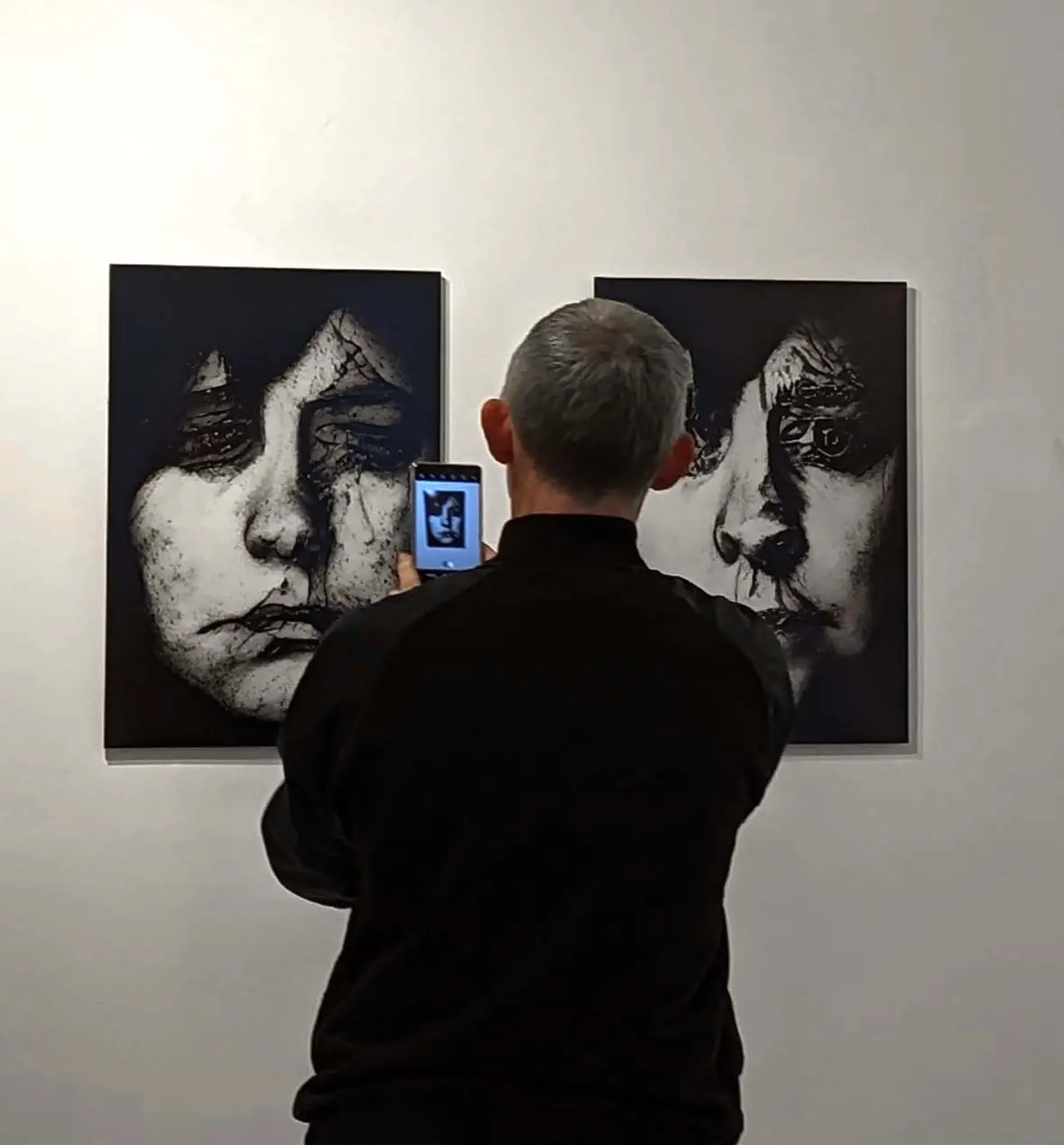
The Elliptical Nature of Recovery
Recovery is not linear. I have never experienced it that way.
There have been days where I felt like I was finally stepping forward, only to find myself back in bed, back in doubt, back in the heaviness I thought I’d escaped. But here’s the truth I’ve come to understand: recovery is elliptical. It loops, it circles, it moves in spirals, and that doesn’t mean we’re failing. It means we’re human.
Relapse as Part of Healing
As someone navigating the long and winding road of mental health recovery, I’ve learned the importance of acknowledging relapse without shame. Relapse isn’t the opposite of healing. It’s a part of it.
The moments where I find myself sliding backward have become some of the most important checkpoints — moments that remind me to check in, to pause, to ask: what do I need right now?
For me, recovery is not linear — it’s a process of circling back, learning, and finding strength in unexpected places.
Finding Language Through Photography
For years, I didn’t have the language to express what I was going through. The dissociation, the numbness, the inner noise — it all felt like too much and not enough at the same time.
Photography gave me a way back to myself. Through the lens, I could reflect emotions I couldn’t name. I could witness what I was feeling, even when I couldn’t explain it.
Spotting the Signs Early
Over time, photography has helped me spot the signs earlier. The subtle cues of burnout creeping in. The emotional disconnection. The way my environment starts to reflect my mental state.
I still struggle. I still have days where everything feels blurred. But now I know what to do with that blur — I know how to frame it, how to seek help, how to return to my support systems.
The Three Pillars: Time, Tenderness, and Trust
Time, tenderness, and trust shape my recovery. I’ve found that the more I understand myself, the better I’m able to ask for what I need.
That hasn’t been an easy lesson. But it’s one I carry with me — one day at a time.
You’re Not Alone
If you’re reading this and you’re in that place of feeling stuck, know that you’re not alone.
When you slip, it doesn’t break you. It means you’re in motion. And motion, even in spirals, is still movement.
Emotion in Focus: Recovery Through Art
This blog is part of my wider project, Emotion in Focus — a mental health-informed art space where images become maps, and expression becomes survival.
Together, let’s stop pretending recovery is a straight road. Let’s speak the truth of the loops and learn to honour them.
If you’re navigating your own elliptical path, take what you need. And if you can, reach out. Recovery begins again each day.
Ultimately, I share my story to remind others that recovery is not linear, but it is still recovery. Each step, each spiral, is part of healing.
— Teresa LyleMore on – A refraction of truth
Media & Platform Mentions
- Belfast Exposed (Deirdre Robb) – Street View Display: At Belfast Exposed Photography Gallery, A Refraction of Truth was featured on the Street View digital screen during the Healing Through Photography conference. Belfast Exposed’s CEO, Deirdre Robb, noted on Twitter that “Teresa Lyle’s Refraction of Truth [is] on our StreetView screen. The work confronts mental illness and living with Dysthymia.”x.com. This underscores the project’s subject matter – Lyle’s personal experience with dysthymia (chronic depression) – and its public display format in Belfast. The tweet (tagged #HTPConference2023) connected the exhibition to the broader conversation on healing through art.
- Mental Health & Arts Platforms: A Refraction of Truth garnered attention in communities focused on art and wellness. For example, the Addiction Recovery (ARC) Fitness group and other mental health advocates shared news of the exhibition on social media, emphasizing its role in sparking conversation about recoverym.facebook.com. While formal press reviews of this specific show are limited, the exhibition’s integration into the Healing Through Photography conference was covered by local media as part of a wider look at therapeutic photographybelfasttelegraph.co.uk. The project is also aligned with Lyle’s own platform Emotion in Focus, a blog for mental health-informed art, indicating an ongoing presence in dialogues at the intersection of art and mental health.
Artist Interview
- Interview at Healing Through Photography Conference (YouTube): As part of the Healing Through Photography conference (April 3–4, 2023 in Belfast), Teresa Lyle was interviewed about her experience. A conference video on YouTube features Teresa Lyle and photographer Paul McCabe discussing their mental health journeys and how photography contributed to healingyoutube.com. In this clip, “we sat down with Teresa Lyle and Paul McCabe to hear about their mental health experience and how photography…”youtube.com. This interview provides insight into Lyle’s personal motivations and the therapeutic role of projects like A Refraction of Truth. (The conference was co-hosted by Belfast Exposed and focused on mental health and art.)
Frequently Asked Questions
Q: Why is recovery not linear?
A: Recovery is not linear because healing often moves in cycles, loops, and spirals. Progress can include setbacks, pauses, and relapses, but these are part of the process, not signs of failure.
Q: What does “elliptical recovery” mean?
A: Elliptical recovery describes the way healing moves in spirals instead of a straight line. Each loop allows for new insights, resilience, and growth, even if it feels like revisiting old struggles.
Q: How can art support mental health recovery?
A: Art provides a way to express emotions and experiences that may be difficult to put into words. Photography, visual narratives, and creative expression can help transform trauma into survival and connection.
Q: What should I do if I relapse in recovery?
A: Relapse is not the opposite of recovery, but a part of it. Use it as a checkpoint to reflect, reach out for support, and ask what you need in that moment. Slipping does not mean you are broken — it means you are human.
Q: Where can I find support for mental health?
A: Support is available through organisations such as Mind UK, Samaritans (call 116 123), Aware NI, and the Mental Health Foundation.
Further Reading
I’ve written more about that in my piece on Loneliness in Recovery
Grief reshapes familiar places. This is something I also explore through Project 0309: Mental Health and Photography in Derry-Londonderry.
This blog is part of Emotion in Focus, a mental health–informed art practice based in Derry-Londonderry.
Photography gave me language when I had none. I’ve written more about this in Photography as Mirror.”
Read Our Blogs
Join Our Mailing list
Enter your email below to receive updates.

Designed with WordPress