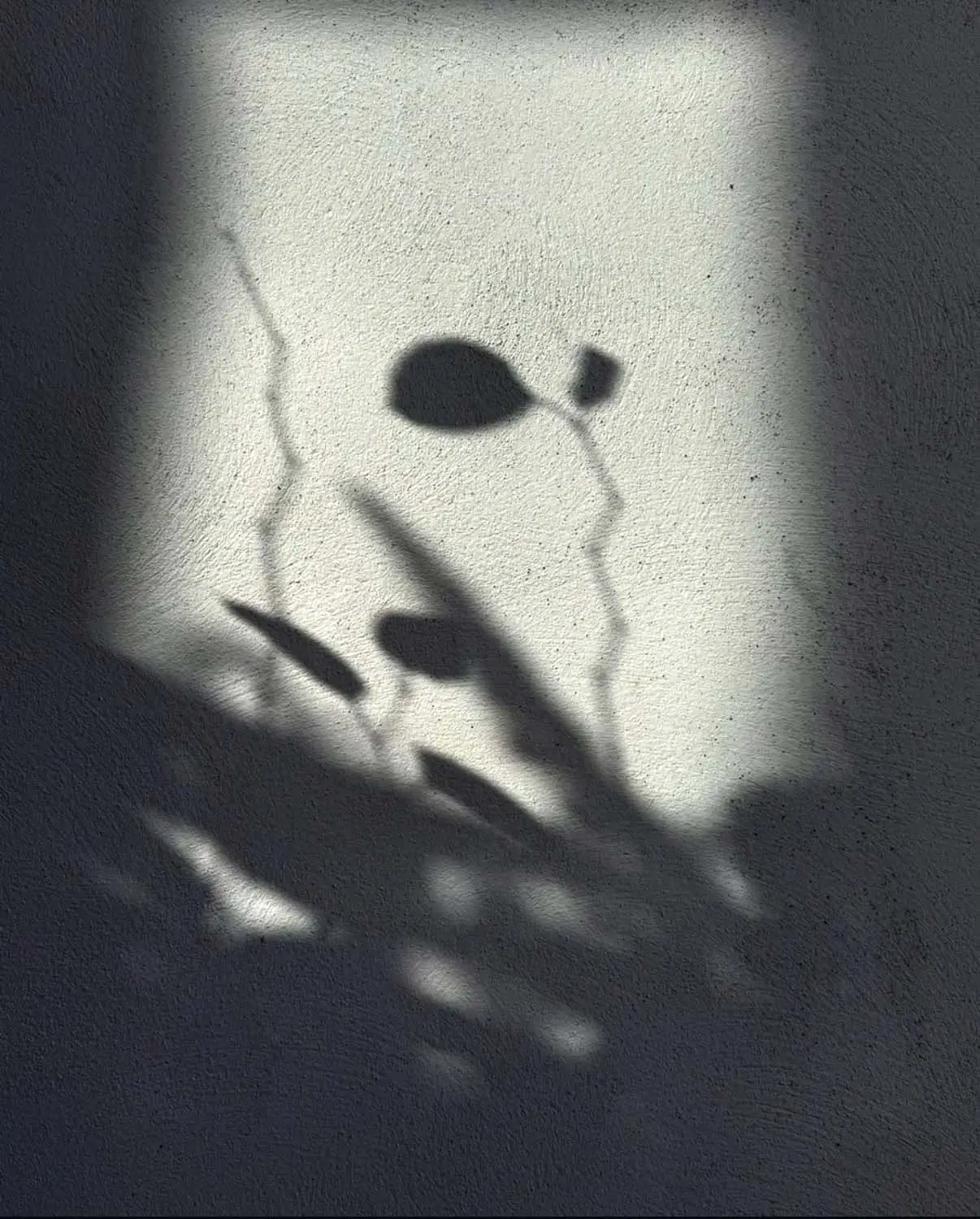
Soft Shadows, Quiet Strength
There’s a softness here — a quiet strength.
A tender shadow rests on a wall. Nothing loud. No declaration of self. Just a plant’s silhouette, diffused by evening light, appearing briefly before it shifts again. It’s the kind of image you might walk past without noticing yet it says everything about what it means to keep growing, even in the dark.
Shadows as Resilience
This photo part of the Emotion in Focus project reminds us that resilience doesn’t always look like action. Sometimes resilience means staying soft while surrounded by shadows.
The rounded leaf bows slightly. A thin, cracked line of stem holds its form. There’s grace in the posture of this plant, and in the way it allows itself to be seen only as shadow – reduced, indirect, but still present.
Soft shadows resilience is more than an aesthetic choice; it narrates survival through image-making. In this piece, shadows become metaphors for endurance, fragility, and emotional strength.
The Language of Shadows
In photography, shadows are often framed as dramatic or sinister. However, here the shadow feels more like a presence than an absence. It marks the quiet trace of something alive, just out of frame.
We often link recovery with movement: doing things, proving progress, pushing forward. Yet healing can also happen in stillness. In watching. In soft witnessing of ourselves and others. This image speaks to that quieter kind of resilience: a gentle refusal to be hardened by life.
Choosing Softness as Resistance
In the context of mental health, choosing softness is radical.
To allow yourself to exist within both light and shadow is to reclaim control from shame. It’s an act of honouring your form, even when it’s not visible in full.
Through this visual narrative, soft shadows resilience becomes a reminder that fragility itself carries strength.
Plants, Shadows, and Symbolism
Plants, especially in shadow, hold powerful symbolic meaning. Psychologically, they represent growth, survival, and regeneration.
When you can’t see the plant itself only its imprint you’re reminded that what matters most is often invisible. Like mental health, healing is internal, gradual, and not always obvious to others.
Photographing plant shadows creates an emotional double exposure: you capture the object and the effect it casts. In this image, we witness both the light and its imprint, side by side.
That becomes a metaphor for living with depression, trauma, or overwhelm: part light, part shadow, yet still growing.
Shadow Work Through Photography
Want to try this practice for yourself?
- Take a photo of a shadow that holds meaning for you.
- It could be a plant on your windowsill, a book left open, or a doorway you pause in.
- Write down what the shadow reminds you of. Is it soft? Sharp? Heavy? Familiar?
This exercise isn’t about technical perfection. Instead, it’s about recognition using photography to see what your body and mind already know, even when words fail you.
Closing Reflections
Ultimately, soft shadows resilience is not only visual it is emotional. It is a quiet testament to survival and healing.
Tag your own images with #EmotionInFocus if you’d like to share them.
This blog was written in Derry, Northern Ireland, as part of a mental health-informed creative practice. Emotion in Focus is based in the North West and explores how photography, emotion, and healing intersect through storytelling, symbolism, and gentle artistic inquiry.
Further Reading on Shadow Photography
- Practical tips and tutorials: “Capturing the Drama: The Essentials of Shadow Photography”, Adorama’s shadow photography ideas, and 5 Tips for Dramatic Shadow Images
- Deepen your technique: Adobe’s guide to shadow composition
- Find creative inspiration: AAP Magazine’s top shadow photography examples
FAQ: Soft Shadows & Resilience in Photography
Q: What does “soft shadows resilience” mean in photography?
A: It refers to using gentle, diffused shadows in images as a metaphor for emotional strength, endurance, and survival. In my work, shadows become symbols of fragility that still hold power.
Q: Why are shadows powerful in visual storytelling?
A: Shadows carry emotional weight because they highlight contrast, suggest mystery, and create depth. They also symbolize the unseen or hidden aspects of our lives, making them ideal for mental health-informed art.
Q: How can I start experimenting with shadow photography?
A: Begin by using natural light—early morning or late afternoon offers the best soft shadows. Position simple objects like plants, books, or windowsills in front of a light source and pay attention to the shapes their shadows create.
Q: Is shadow photography only for professionals?
A: Not at all. Shadow photography is one of the most accessible forms of creative image-making. With just a phone camera and natural light, you can begin exploring how shadows can express emotion and narrative.
Q: How does shadow photography connect to mental health?
A: Shadows visually express themes like dissociation, resilience, fragility, and healing. Photographing them can help people process emotions that may be difficult to put into words, turning image-making into a form of survival and self-expression.
Q: What are some artists or resources I can look at for shadow photography inspiration?
A: Explore works by surrealist and contemporary artists like Man Ray and Kyle Thompson, or check out online guides such as Adorama’s shadow photography tips and Adobe’s introduction to shadow photography
Read Our Blogs
Join Our Mailing list
Enter your email below to receive updates.

©️Teresa Lyle Media
Leave a Reply