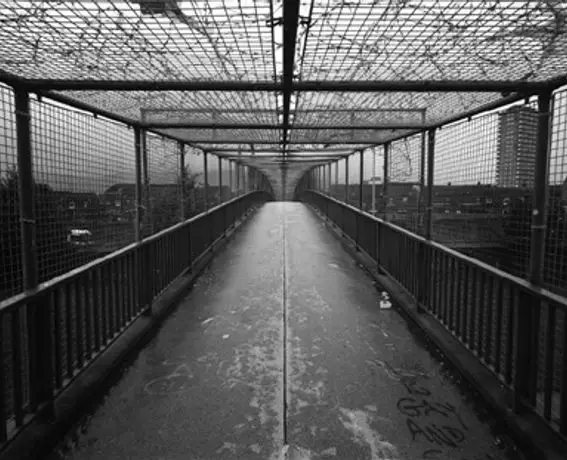
Willie Doherty photography in Derry offers a stark and unsettling record of a city shaped by conflict. As a Northern Irish artist, Doherty has long explored the psychological landscape left by the Troubles. His photographs and video works capture more than just scenes of violence they reflect the silence, memory, and emotional residue that continue to weigh on communities today.

Willie Doherty Photography and the Legacy of the Troubles
Doherty’s early images, often staged in familiar locations around Derry-Londonderry, highlight the tension between lived experience and political narrative. His work sits alongside other Troubles photography that interrogates how violence becomes embedded in everyday life.
Mental Health, Trauma, and Memory in Doherty’s Work
Northern Ireland’s suicide rate has remained among the highest in the UK, with research showing that more people have died by suicide since the Good Friday Agreement than were killed during the conflict itself. In Derry, the River Foyle is tragically central to this story.
Understanding this context helps frame Doherty’s work as more than political commentary. It becomes a meditation on how violence, loss, and surveillance shape collective mental health. For families in Derry — including my own — this is not abstract. It is lived reality.
Photography as Witness and Testimony
Like Doherty, I turn to photography as a way of processing what cannot always be spoken. In the 0309 gallery, images of the Foyle and its search routes hold both grief and resilience. They echo Doherty’s use of landscape as a psychological mirror. His images act as witnesses to the silence left behind, offering viewers a way to confront unspoken truths.

Landscapes of Fear and Survival
By reworking the familiar landscapes of Derry, Doherty shows how trauma reshapes place itself. Photography does not solve trauma, but it allows us to give it form. To capture silence, absence, and contradiction in a way that words often cannot. In this sense, Doherty’s practice is part of a lineage of survival through image-making — one that I continue in my own work.
The Relevance of Willie Doherty’s Work Today
Even decades later, his practice continues to resonate. As suicide rates in Northern Ireland remain among the highest in the UK, Doherty’s exploration of trauma and its aftershocks feels urgent. His photography reminds us that conflict leaves psychological scars long after the violence ends. Willie Doherty photography continues to matter because it shows us how trauma lingers, shaping landscapes, memories, and mental health in Northern Ireland.
F.A.Q
Q: Who is Willie Doherty?
A: Willie Doherty is a Derry-born photographer and video artist whose work explores themes of conflict, memory, trauma, and identity in Northern Ireland.
Q: How does Willie Doherty’s photography connect to mental health?
A: His work documents landscapes scarred by the Troubles, highlighting how collective trauma continues to shape individual and community mental health in Derry-Londonderry.
Q: Why is Willie Doherty’s photography important in the context of Derry-Londonderry?
A: His photography serves as both historical record and emotional testimony, showing how sites in the city hold memories of violence, silence, and resilience.
Q: How does Willie Doherty’s work relate to suicide awareness in Northern Ireland?
A: By revealing the lingering psychological impact of conflict, his work indirectly addresses the high suicide rates in post-conflict Northern Ireland, where unresolved trauma continues to affect mental health.
Q: Where can I see Willie Doherty’s photography?
A: His work has been exhibited internationally and is held in major collections, including the Tate. Locally, it connects deeply with those who understand the city’s past and present struggles.
Further Reading
Join Our Mailing list
Read our Blogs

©Teresa Lyle Media
Leave a Reply