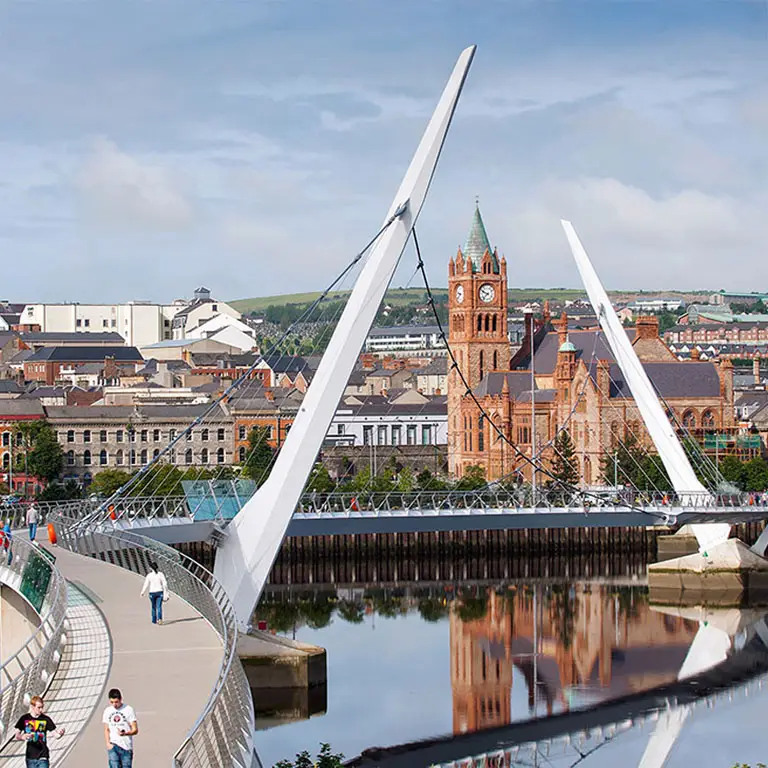
Northern Ireland carries a history that lingers in its streets, families, and communities. Post-conflict, we are still learning how to speak about trauma. Often, silence feels safer but silence does not heal. Art and mental health have helped people express their feelings.
For many people, emotional wounds remain beneath the surface. However, art provides another way to speak without words.
Art and Mental Health as a Language for Trauma
Art gives us another path. It allows expression without demanding neat conclusions. Photography, painting, theatre, and writing all offer ways to carry what we cannot say aloud.
My own work, including Project 0309: Mental Health and Photography in Derry-Londonderry, comes from this need to express. Losing my cousin to suicide was not something I could speak about easily. But through photography, I found a language for it. Images became stand-ins for memory, grief, and resilience.

The Northern Irish Context of Art and Mental Health
Northern Ireland continues to experience some of the highest suicide rates in the UK. More lives have been lost to suicide since the Good Friday Agreement than were killed during the Troubles. Trauma is not only personal — it is collective, carried across generations.
Collective Trauma and Creative Healing
In this environment, art becomes more than expression – it becomes survival. It is a way to take what is unspeakable and make it visible, to transform silence into something others can see, feel, and enter.
Through painting, photography, and performance, artists in Northern Ireland turn private pain into shared understanding – and that process itself becomes a form of resilience.

In this environment, art becomes more than expression. It is survival. It is a way to take what is unspeakable and make it visible, to transform silence into something that others can see, feel, and enter.
Read our blog on the theatre production Forever and Ever
Artists Who Bear Witness
Many Northern Irish artists have addressed mental health through their work:
- Willie Doherty – using landscapes of Derry to explore memory, fear, and trauma left by the Troubles. Read more on Doherty’s work
- Donovan Wylie – documenting sites like the Maze prison to expose the architecture of control. Read more on Wylie’s work
- Paul Seawright – photographing sites of violence and absence, turning landscapes into psychological evidence. Read more on Seawright’s work
Their work, alongside projects like 0309, shows that art can function as both archive and testimony carrying wounds that statistics and reports cannot.
Collective Trauma and Creative Healing
In this environment, art becomes more than expression it becomes survival.
It is a way to take what is unspeakable and make it visible, to transform silence into something others can see, feel, and enter. Through painting, photography, and performance, artists in Northern Ireland turn private pain into shared understanding and that process itself becomes a form of resilience.
From Silence to Expression: Healing Through Art in Northern Ireland
Across Northern Ireland, more artists are opening conversations around mental health. Their work reminds us that expression is not indulgence it is survival. By naming our wounds creatively, we open discussions that statistics alone cannot.
Furthermore, creative expression offers a way to transform silence into visibility. When pain becomes visible, it can be understood, shared, and softened through empathy. In this sense, every artwork becomes a small act of resistance against emotional numbness.
However, expression is not always easy. For many, silence feels safer than speaking about mental health or grief. Yet, through art, individuals begin to shape the chaos inside them into something coherent. Consequently, what once felt unspeakable becomes a shared truth — something that can be witnessed rather than hidden.
The Role of Creative Expression in Mental Health Recovery
Creativity provides not only a voice but also structure and grounding. For instance, the process of photographing, painting, or writing can slow racing thoughts and help people regain control over their emotions. Therefore, art becomes both a coping strategy and a way to rebuild identity.
In addition, creative practice connects individuals who might otherwise feel isolated. Exhibitions, workshops, and community projects create spaces where people realise they are not alone. Moreover, these collective experiences remind participants that healing can emerge through connection.
Final Thought:
As a result, art builds solidarity a reminder that recovery is a shared journey, not a solitary act. Ultimately, this shared creative energy reshapes how we view mental health in post-conflict Northern Ireland. It proves that healing is possible when expression replaces silence and community replaces stigma.
FAQ: Art & Mental Health in Northern Ireland
1) How can art help with trauma recovery?
Art offers a non-verbal way to process difficult memories, regulate emotions, and build connection. It doesn’t “fix” trauma, but it helps you name it and move through it at your own pace.
2) Is “art therapy” the same as making art?
Not exactly. Making art is therapeutic, but Art Therapy is a clinical practice run by a qualified Art Therapist. Both are valuable; one is professional treatment, the other is personal practice.
3) Where can I find mental health support in Northern Ireland?
- Lifeline (24/7): 0808 808 8000
- Samaritans (24/7): 116 123
- AWARE NI (depression support & groups)
- MindWise (services & advocacy)
- Inspire Wellbeing (mental health & addiction support)
4) What should I do in a crisis or if someone is at immediate risk?
Call 999 right now. If safe, stay with the person and contact Lifeline (0808 808 8000) or Samaritans (116 123) while you wait for help.
5) I’m not ready to talk. Can creativity still help?
Yes. Photography, journaling, drawing, and movement can reduce stress and express what words can’t. Start small: one photo, one line, one mark.
6) Are there Northern Irish artists exploring trauma and memory?
Yes — Willie Doherty, Donovan Wylie, Paul Seawright, among others, use landscape, architecture, and absence to explore memory, fear, and post-conflict life.
10) What’s the main takeaway of this article?
In Northern Ireland’s post-conflict context, creative expression is a survival tool — turning silence into connection, and pain into shared understanding.
support links (Northern Ireland)
- Lifeline (NI crisis helpline, 24/7): 0808 808 8000 – free, confidential crisis support.
https://www.lifelinehelpline.info lifelinehelpline.info - Samaritans (UK/NI, 24/7): 116 123 – free from any phone; email: jo@samaritans.org.
https://www.samaritans.org/how-we-can-help/contact-samaritan/talk-us-phone/ Samaritans - AWARE NI (Depression charity, NI-wide) – support groups, education.
https://aware-ni.org aware-ni.org - MindWise (NI) – services across NI, advocacy, community support.
https://www.mindwisenv.org/what-we-do/mindwise-services/ MindWise - Inspire Wellbeing (NI & ROI) – mental health and addiction services; info line.
https://www.inspirewellbeing.org/our-services/ inspirewellbeing.org - HSC NI “Signposts to Help” (Dept. of Health) – helplines incl. Lifeline, Childline, Samaritans.
https://www.health-ni.gov.uk/articles/signposts-help Department of Health
Crisis note: If someone is in immediate danger, call 999 (confirmed guidance via Inspire).
More Blogs
Join Our Mailing list

©Teresa Lyle Media
Leave a Reply