Estimated reading time: 9 minutes
Key Takeaways
- A dandelion’s slow collapse mirrors human resilience and the struggle for survival amid adversity.
- Survival does not equal thriving; it requires suitable conditions which many fail to provide, contributing to long-term mental health issues.
- Long-term depression often appears functional, masking profound internal struggles that diminish one’s identity.
- Healing involves recognising unhealthy environments, allowing for grief and growth without self-destruction.
- True resilience emerges in the quiet instinct to seek warmth, despite the challenges that try to take it away.
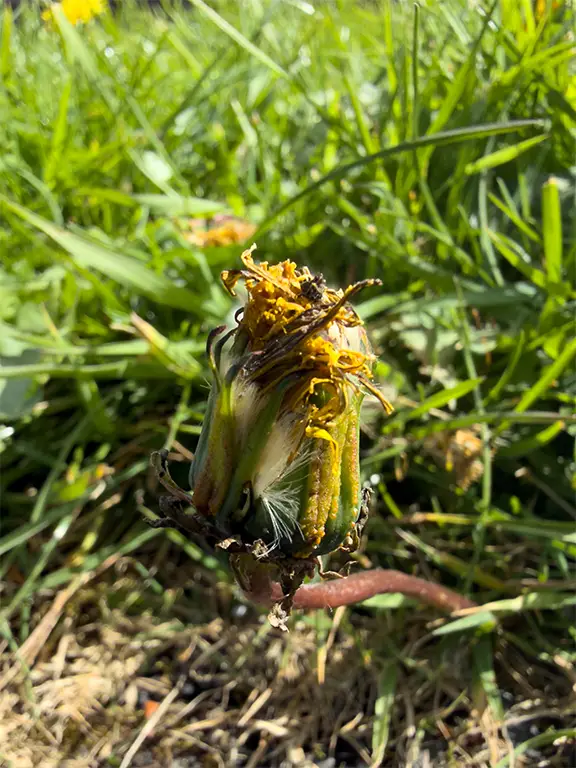
There is something strangely human about a dandelion. The slow collapse of a dandelion can even reflect moments in our own lives.
People call it a weed because it survives where other things cannot. It pushes through cracks in concrete, appears in places never intentionally planted, and continues growing despite being ignored, stepped on, cut back, or uprooted. Society often uses the dandelion as a symbol of resilience. A symbol of persistence. Survival against the odds. But I see a Slow Collapse of a Dandelion and I that weed.
But survival is not the same thing as thriving.
That is the part people rarely talk about.
A dandelion still requires sunlight. It still requires soil, water, space, conditions. Even the strongest living thing eventually begins to fail when the environment around it slowly strips away the things it needs to sustain itself. Survival can become so prolonged that people mistake endurance for health.
I think that is something many people living with long-term mental health conditions understand too well.
For most of my life, I have lived with dysthymia and moderate depression alongside traits and experiences connected to borderline personality disorder, social anxiety, and generalised anxiety. Some days these conditions feel loud and consuming. Other days they exist more quietly, like background static that never fully disappears. A constant hum beneath everyday life.
What people often misunderstand about long-term depression is that it does not always look dramatic.
Sometimes it looks functional.
You still go to work.
You still answer messages.
You still show up.
You still create.
You still laugh at the right moments.
You still perform versions of yourself that make other people comfortable.
But internally, something has already started folding inward.
That is the part I think about when I look at a dying dandelion.

Not the vibrant yellow bloom people photograph in spring, but the slower version. The quieter version. The one that has begun curling into itself after prolonged exposure to harsh conditions. The one trying to preserve what little energy it has left.
People often talk about growth as though it is entirely personal responsibility. Work harder, heal harder, think differently, stay positive, be resilient, adapt, push through.
But human beings are deeply shaped by the environments they exist within.
We are shaped by the rooms we spend years sitting in.
The people we keep trying to earn love from.
The spaces that tolerate us but never truly hold us safely.
The workplaces, relationships, friendships, systems, and emotional climates we keep investing ourselves into because we believe eventually the effort will be reciprocated.
You can pour your entire heart into trying to grow somewhere that was never designed to nurture you.
And for a while, you convince yourself that if you just try harder, become quieter, more useful, more productive, more understanding, more patient, more resilient eventually things will improve.
Eventually you will feel safe.
Eventually you will feel valued.
Eventually the environment will soften.
But some environments only know how to take.
That is a painful thing to realise.
Especially when you have already spent years investing parts of yourself into them.
There is grief in recognising how much time has passed while waiting for somewhere or someone to become emotionally safe.
Time is one of the only things in life that can never truly be reclaimed. Once it is gone, it exists only as memory, fragments, emotional residue, echoes. You can rebuild yourself. You can leave environments. You can learn healthier coping mechanisms. You can recover parts of your identity.
But you cannot retrieve the years.
You cannot reach back into the past and return the emotional energy spent surviving spaces that slowly hollowed you out.
I think that is one of the deepest pains attached to depression.
Not simply sadness.
Not simply exhaustion.
But mourning time itself.
Mourning the version of yourself that might have flourished under different conditions.
People living with dysthymia often become experts at functioning while emotionally depleted. It becomes normal to exist in a low emotional baseline for so long that you stop recognising it as suffering. The sadness becomes familiar, predictable, integrated into your identity.
You begin adjusting your life around survival instead of fulfilment.
And slowly, without even noticing it, parts of you stop reaching toward the light.
That is what unhealthy environments do.
Not always through cruelty.
Sometimes through absence.
Neglect.
Inconsistency.
Emotional instability.
Lack of recognition.
Lack of safety.
Feeling tolerated rather than valued.
There is a profound psychological difference between being useful to a space and being genuinely cared for within it.
I think many people with BPD traits understand this conflict intensely. The desperate desire for connection mixed with the chronic fear of abandonment can create an exhausting emotional contradiction. You keep trying to secure safety from places that repeatedly prove unstable because the fear of losing connection often feels more terrifying than enduring the pain itself.
So you stay.
You overextend.
Over-give.
Over-explain.
Overanalyse.
Overcompensate.
You make yourself emotionally smaller to maintain attachment.
Until eventually there is barely anything left that still feels entirely your own.
Social anxiety and generalised anxiety compound this further. The world begins feeling less like a place you move through naturally and more like a constant psychological negotiation. Every interaction becomes layered with self-awareness, anticipation, fear of judgement, fear of misunderstanding, fear of rejection.
Even rest stops feeling restorative because your nervous system never fully powers down.
Safe ones.
And when these conditions coexist with long-term depression, the result can feel like living life emotionally underwater.
You can still see the world moving above you.
You can still hear distant versions of joy.
But everything feels slowed, muted, heavier.
That is why safe environments matter.
Not luxurious environments.
Not perfect environments.
Spaces where your nervous system is not constantly preparing for emotional impact.
Spaces where you are allowed to exist without having to continuously earn your right to belong.
Spaces where vulnerability is not weaponised.
Spaces where rest is not mistaken for weakness.
Spaces where your humanity matters more than your usefulness.
Because growth is not simply about strength.
Growth requires safety.
Even plants lean toward the conditions most likely to keep them alive.
The tragedy is that many people spend years blaming themselves for not flourishing in environments actively starving them emotionally.
A flower struggling in darkness is not failing because it is weak.
It is responding naturally to deprivation.
I think there is also a quiet anger that comes with eventually recognising this.
The anger of realising how long you tried to survive inside conditions that continuously diminished you.
The anger of understanding that you kept valuing spaces, systems, and people more than they ever truly valued you in return.
The anger of recognising how much emotional labour was poured into trying to maintain things that were slowly damaging your mental health.
But beneath that anger is grief.
Because once you truly see it, you cannot unsee it.
You begin mentally revisiting years of your life differently. Conversations feel different in retrospect. Relationships feel different. Entire chapters of your identity begin restructuring themselves around a new understanding:
I was trying to bloom somewhere that was never safe enough to grow.
That realisation hurts.
Not because it makes you weak, but because it forces you to confront how long survival became your normal state of existence.
And yet, despite all of this, the dandelion still matters to me.
Because even in decline, it tells the truth.
Not the polished version of resilience people post online. Not the motivational quote version of suffering where pain automatically transforms into wisdom.
Real resilience is often much quieter.
Sometimes resilience is simply remaining here despite everything inside you wanting to emotionally disappear.
Sometimes resilience is continuing to create while struggling internally.
Sometimes resilience is learning that your worth is not dependent on how useful you are to environments incapable of nurturing you.
Sometimes resilience is finally admitting that you are exhausted.
And sometimes resilience is recognising that survival alone is not enough anymore.
That maybe you deserve conditions where growth does not require self-destruction.
The older I get, the more I realise healing is not about becoming somebody entirely new. It is about slowly removing yourself from environments that continuously teach your nervous system that it is unsafe to exist authentically.
Healing is not linear optimism.
It is not pretending everything becomes beautiful.
Sometimes healing begins with grief.
Grief for lost time.
Grief for neglected versions of yourself.
Grief for years spent emotionally shrinking to fit inside places that never truly held you carefully.
But grief also means something mattered.
The dandelion still reached for light even while dying.
Maybe there is something deeply human in that too.
Not perfection.
Not endless strength.
Just the quiet instinct to keep searching for warmth despite everything that tried to convince you it did not exist.
Further Reading
- Mind UK – Understanding Depression
- A clear overview of depression, emotional exhaustion, and long-term low mood.Mind UK – Borderline Personality Disorder (BPD)
- Explores emotional instability, attachment, identity, and interpersonal struggles often associated with BPD.NHS – Generalised Anxiety Disorder
- Information on chronic anxiety, persistent worry, and the psychological toll anxiety can have over time.Psychology Today – The Importance of Emotional Safety
- Discusses how emotionally safe environments affect mental wellbeing, trust, growth, and psychological resilience.Kew Gardens – Dandelion Facts and Symbolism
- Looks at the resilience, adaptability, and misunderstood nature of dandelions within culture and nature.The School of Life – Why We Stay in Emotionally Difficult Situations
- Reflective reading on attachment, emotional investment, and remaining in unhealthy emotional spaces.Carl Jung’s Concept of the Shadow Self
- Explores the psychological “shadow” and suppressed emotional experiences referenced throughout many Emotion in Focus pieces.Mental Health Foundation – Loneliness and Mental Health
- Examines emotional isolation, social disconnection, and long-term psychological impact.
FAQ
Dysthymia, also known as persistent depressive disorder, is a long-term form of depression that can affect mood, energy, motivation, and emotional wellbeing over extended periods.
Unsafe or emotionally unstable environments can contribute to anxiety, emotional exhaustion, depression, and difficulty maintaining a stable sense of self.
Photography can act as a reflective and expressive tool, helping individuals visually communicate emotions, trauma, identity, and personal experiences.
Other Blogs
Join Our Mailing list
Enter your email below to receive updates.

©️Teresa Lyle Media
Leave a Reply